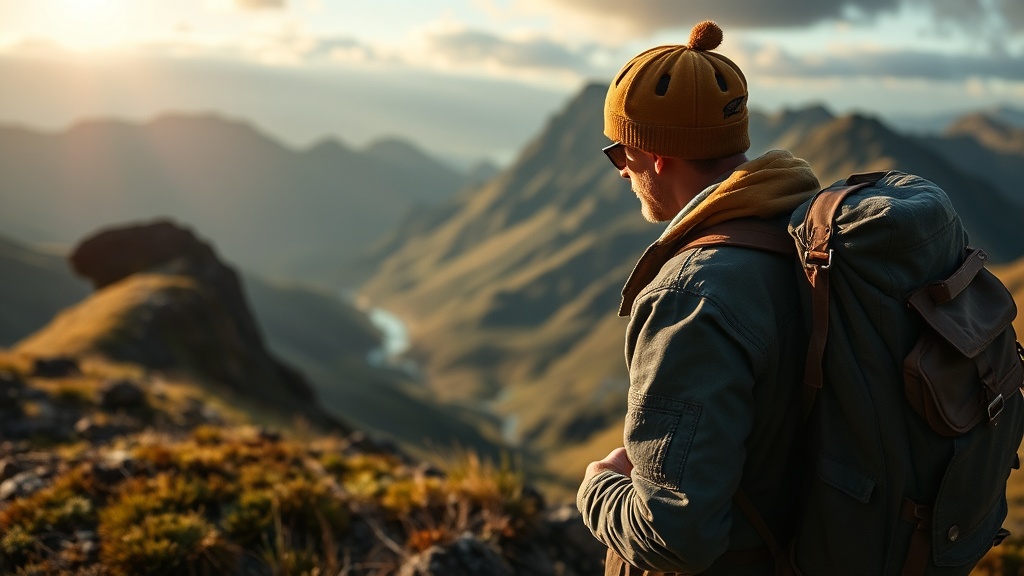
Mastering the Art of Natural Navigation Without a Compass

The Fallacy of Digital Reliance
I spent fifteen years in logistics managing complex supply chains where a single decimal point error could derail an entire operation. In that world, precision wasn't a preference; it was a requirement. When I transitioned to hiking the rugged terrain of the Cascades, I realized that most modern hikers have developed a dangerous level of complacency. They rely entirely on GPS units and smartphone apps, treating a glowing screen as an infallible oracle. The problem is that electronics fail. Batteries die, signals drop in deep canyons, and hardware breaks.
If you cannot orient yourself using the environment around you, you aren't a hiker—you’re a passenger waiting for a rescue. Natural navigation is not about "vibes" or intuition; it is about observing biological and geological data points with the same rigor a navigator uses to plot a course. This guide is designed to move you beyond the screen and into a state of active situational awareness.
Before we dive into the technicalities of celestial and biological indicators, ensure you have mastered the fundamentals of movement and gear management. If you are still struggling with basic orientation, you should first review our guide on essential skills for navigating the wilderness without GPS. Without a foundation in basic land navigation, these advanced techniques will only serve to confuse you further.
1. Celestial Navigation: The Constant Variables
The sun and stars are the most reliable, non-depleting data sources available to a human being. While the sun is the most obvious, many hikers fail to use it with any degree of precision. They know "the sun rises in the east," but they don't understand how to use it to find a specific bearing when the sun is at its zenith.
The Solar Method and Shadow Casting
The sun's position is a moving target, but its arc is predictable. To use the sun for orientation, you must understand the concept of the shadow tip method. This is a two-step process that provides a relatively accurate east-west line:
- The First Stake: Place a stick in the ground (approximately 3 feet tall) and mark the tip of the shadow with a stone.
- The Wait: Wait approximately 15 to 20 minutes. The shadow will move as the sun progresses through the sky.
- The Second Stake: Mark the new position of the shadow tip with another stone.
- The Line: Draw a straight line between the two marks. This line represents an east-west axis. The first mark is always West, and the second mark is always East.
This method is far more accurate than a visual guess. In the Cascades, where heavy canopy or cloud cover can obscure the sun, this method is your fallback. If the sun is obscured, you must rely on the secondary indicators discussed below.
Navigating by the Night Sky
If you find yourself caught in a night-time navigation error, do not panic. Panicking leads to poor decision-making and increased caloric expenditure. Instead, locate the North Star (Polaris). In the Northern Hemisphere, finding the Big Dipper (Ursa Major) is the standard procedure. Follow the two stars at the end of the "dipper's bowl (Dubhe and Merak) and trace a straight line outward. The first bright star you hit is Polaris. Polaris stays fixed in the sky while everything else rotates around it, making it the most reliable navigational anchor in existence.
2. Biological Indicators: Reading the Living Landscape
Nature is not a static backdrop; it is a living system that reacts to the environment. These biological markers are subtle, but to a trained eye, they are as clear as a trail marker.
Vegetation and Aspect
In the mountains, the "aspect"—the direction a slope faces—dictates the microclimate. This has a direct impact on plant life. Generally, in the Northern Hemisphere, south-facing slopes receive more direct sunlight. This results in:
- Drier Soil: Plants on south-facing slopes must be drought-resistant.
- Different Species: You will see more sun-loving, hardy vegetation here.
- Less Moss/Lichen: On the shady, north-facing sides of trees or rocks, you will find significantly more moisture-retaining growth.
The Moss Rule (The Caveat): You have likely heard that "moss grows on the north side of trees." As a professional, I must tell you: this is an unreliable generalization. Moss grows wherever it is damp and shaded. If you are in a deep, misty ravine, moss will grow on all sides of a tree. Use moss as a secondary confirmation, not your primary heading. It is a piece of a larger puzzle, not the whole picture.
Tree Canopy and Wind Patterns
Trees are constant witnesses to the prevailing winds. In many mountainous regions, the wind arrives from a consistent direction for much of the year. Over decades, this wind shapes the trees. If you observe a forest where the trees are leaning or have "flagged" branches (branches growing only on one side), you are looking at a record of the dominant wind direction. If you know the prevailing winds in your specific region, you can use this to maintain your heading even when visibility is low.
3. Terrain Association: The Macro View
The most effective way to navigate without a compass is to stop looking at your feet and start looking at the horizon. This is called terrain association. You are essentially matching the physical features around you to a mental or physical map.
A "handrail" is a long, linear feature like a ridge, a river, or a prominent valley. If you know you need to travel north, and there is a major river running north-south to your west, that river is your handrail. As long as you keep that river to your left, you are on the correct general heading.
A "catch feature" is a definitive landmark that tells you that you have gone too far. If you are hiking toward a specific peak and you hit a massive, impassable gorge, that gorge is your catch feature. It tells you: "Stop. You have overshot your target." Without a catch feature, you can wander aim-lessly for miles without realizing you've passed your destination.
"The difference between a hiker and a lost person is the ability to recognize when the landscape no longer matches the mental model in their head."
4. Maintaining Physical and Mental Readiness
Navigation is as much a cognitive task as it is a physical one. When your blood sugar drops or your circadian rhythm is disrupted, your ability to process spatial data diminishes. I have seen many hikers make catastrophic navigational errors simply because they were exhausted and hungry.
To maintain the mental acuity required for complex navigation, you must manage your internal systems. This includes maintaining a consistent sleep-wake cycle and a nutrition plan that supports sustained energy. For those interested in how biological timing affects overall performance, understanding how to reset your body clock can be vital when transitioning between different time zones or high-altitude environments. Furthermore, long-term resilience in the outdoors is built on more than just gear; it is built on metabolic health. If you want to learn more about optimizing your body for long-term performance, check out our resources on circadian-aligned food strategies.
Summary Checklist for Natural Navigation
When you find yourself without a compass or GPS, run through this checklist to re-orient your brain:
- Identify the Sun/Stars: Establish a primary cardinal direction (North/South/East/West).
- Observe the Aspect: Look at the slope gradients. Is the sun hitting the side of the mountain you are on? Is the vegetation changing?
- Find a Handrail: Identify a long, linear feature (river, ridge, road) to guide your progress.
- Identify a Catch Feature: What is the one landmark that tells you that you've gone too far?
- Check Your Internal State: Am I tired? Am I hungry? Am I making decisions based on fatigue?
Precision in the wilderness is not about being perfect; it is about having a system of redundancies. A compass is a tool, but your ability to read the earth is a skill. Build the skill, and you will never truly be lost.