The Protocols That Save Lives: Women Researchers the Outdoor Industry Forgot to Credit
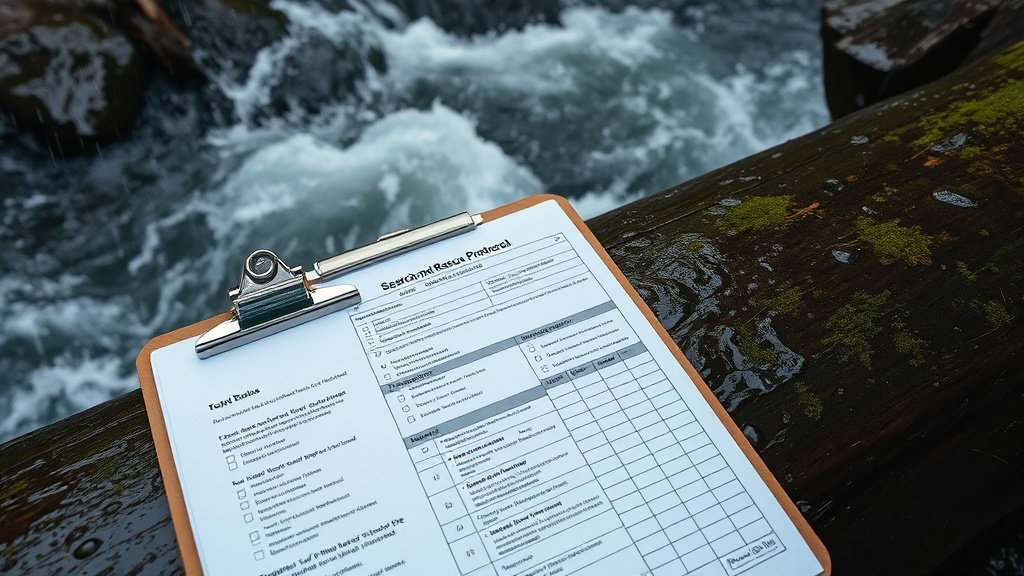
Three years ago, I pulled two teenage boys out of a creek crossing on the Baker River Trail. They'd postholed into runoff from a snow bridge that collapsed upstream. Water temperature: somewhere around 38°F. What stopped this from being a body recovery was a protocol I'd read in a SAR training packet — a cold-water immersion triage sequence built on survival time data from exercise physiology research.
What that training packet didn't mention: the foundational survival estimates underpinning that protocol — precise relationships between water temperature, body composition, and time-to-incapacitation — were refined through research that included women exercise physiologists whose names don't appear on gear marketing materials or the "experts" rosters at outdoor expos.
That's the gap I want to talk about. Not as sentiment. As a logistics problem.
Who Actually Writes the Protocols
Let me be specific about what I mean by "safety standards."
When you see a trail rated Class 2 with a "dangerous stream crossing" warning in March, someone had to define what "dangerous" means in quantifiable terms. When a SAR team deploys with a thermal protocol for a missing hiker in alpine terrain, someone wrote that protocol. When trail condition reports use standardized language — "postholing to knee depth above 4,500 feet" instead of "snowy" — someone built that taxonomy.
These aren't glamorous jobs. They don't get keynote slots. They're the administrative and scientific infrastructure that turns mountains into places people can navigate and survive.
In the PNW, women have been doing this work in unglamorous volume.
The Washington Trails Association's trail condition reporting system — the one you're reading before you drive three hours to a trailhead — has been shaped through the sustained effort of women rangers and volunteer coordinators who pushed for consistent terminology after years of watching incident reports that couldn't be compared across districts. "Icy patches" means nothing to a trip planner. "Ice on exposed switchbacks above 3,800 feet, microspikes required" is actionable. That shift didn't happen by accident, though the specific names behind it are buried in meeting minutes rather than press releases.
Washington State's Snohomish County SAR unit, one of the most active technical rescue teams in the Cascades, has had women in leadership roles involved in protocol development. The standardized rapid-assessment triage sequences used for injured hikers in the North Cascades — the kind that shape the decision about whether you're moving a victim or staging for helicopter extraction — are refined through after-action reviews. If you pull the unit's published leadership rosters over the past decade, women coordinators are part of that picture. Their names aren't the ones that show up in outdoor media.
The Cold-Water Data That Actually Matters Right Now
It's March 6. Spring appears to be arriving in the Cascades. This is among the most dangerous seasonal transitions of the year for Cascades hikers.
Here's why: snow bridges collapse over creek crossings that aren't even marked on trail maps. Meltwater turns ankle-deep crossings into thigh-deep ones overnight. And hikers who read "moderate difficulty" on AllTrails in August assume that rating holds in March.
The cold-water survival data that informs how I write hazard warnings on this site — and how I assess risk in the field — comes from a body of research that is genuinely collaborative. Efforts to refine survival time estimates using hiker body composition data that goes beyond military recruit baselines — not just young male athletic subjects — have meaningfully improved how we assess risk for a broader hiker population.
The physiology of cold shock — the involuntary gasp reflex and hyperventilation that creates immediate drowning risk in cold water immersion, well before hypothermia is a factor — fundamentally changed how SAR teams think about water rescue. Dr. Mike Tipton at the University of Portsmouth's Extreme Environments Laboratory is one name worth knowing. His decades of research on cold shock response is foundational to modern water rescue protocol (Tipton et al., "Cold water immersion: kill or cure?" Experimental Physiology, 2017). It's also not cited in the advertising for the wading poles and stream-crossing gaiters being marketed to Cascades hikers right now.
Cold shock creates meaningful incapacitation risk within the first one to three minutes of immersion in near-freezing water — faster than most people expect, and independently of how long full hypothermia takes to develop. That distinction took years of rigorous documentation to establish clearly. Use the data accordingly: if you go in at 38°F, your window to self-rescue is measured in minutes, not the indefinite margin most hikers assume at a borderline crossing.
The Avalanche Science Problem
Avalanche airbag packs get marketed almost exclusively to men. The imagery is male freeride skiers in massive terrain. The messaging centers risk-taking and aggression.
The data on airbag efficacy — critically, why burial depth is not the only variable, and why burial location within the debris and body orientation matter significantly — has been built substantially through European snow science institutions. Research from the Swiss Institute for Snow and Avalanche Research (SLF), including work on snow mechanics and slab fracture propagation, informs how experienced Cascades climbers read slope angles and crown fracture risk. Women scientists have contributed to this research program; a review of SLF publication records reflects women researchers as co-authors on key slab dynamics and burial survival studies. The equipment manufacturers know this research and use it. They don't put those researchers' names on the hang tags.
What this means practically: the airbag is not a permission slip for aggressive terrain. The research consistently shows that burial location and depth both determine outcome — which means your terrain choices before deployment matter more than what's strapped to your back.
The Recognition Gap as a Data Integrity Problem
Here's the logistics framing: when you don't know who built a system, you don't know who to contact when the system has an error.
Outdoor media has spent decades building a canon of "legendary mountaineers" and "safety experts" that skews heavily male. The practical consequence is that when safety protocols need updating — when new data contradicts old assumptions, when a trail hazard classification turns out to be systematically wrong — the people who built the original framework are harder to find.
I ran into a version of this when building the hazard notation framework I use for my own trail reports. I went looking for primary sources — not gear blogs, not gear company safety guides, but the actual protocols and who filed them. In several cases, the credited author on a WTA or Forest Service document was a woman ranger or coordinator whose name doesn't appear anywhere in the outdoor media ecosystem. When I tried to trace a specific stream-crossing risk notation that I suspected was calibrated on outdated snowpack timing assumptions, the person best positioned to explain its origin and limitations was someone who'd been working the district for over a decade — not a name anyone would recognize from a gear catalog.
The correction got made. The trail reports are more accurate. Her name is not in any press release.
The women doing this work are findable if you look at the actual source documents. Most people don't look at the source documents.
The Cascades in March: What This Means for Your Trip Planning
International Women's Day is Sunday. I'm not writing this as a celebration post. I'm writing it because spring is here and people are going to make decisions based on safety systems that exist because of specific people doing specific unglamorous work — and understanding the provenance of those systems makes you a better user of them.
Practical take-homes for the next three weeks of spring hiking:
On creek crossings: The cold shock research says your functional window after immersion in 38°F water is minutes, not indefinite. The gasp reflex and loss of breath control come fast — well before hypothermia is in play. If a crossing looks questionable, treat it as non-crossable. There is no research supporting the optimism most hikers bring to borderline crossings in snowmelt runoff.
On avalanche terrain: If you're heading into steeper terrain as the freeze-thaw cycle destabilizes snowpack, the airbag statistics say the bag is not a permission slip. Read slope aspect and angle. Understand what weak layers look like. The snow science says burial location and depth both matter — terrain choice before the slide is the primary variable.
On trail condition reports: When you read a WTA condition report, you're reading a standardized document that exists because someone pushed to standardize it. Use it precisely. "Postholing to knee depth above 4,500 feet" is not a suggestion about gaiters; it's a time and energy expenditure calculation that may change your turnaround point.
The safety infrastructure of the Cascades is built by people who mostly don't care about credit. That's fine — credit doesn't save lives, protocols do. But you should know that many of those protocols were shaped by women researchers and coordinators doing work that outdoor culture systematically undervalues and undernames.
The trail doesn't care who built the hazard framework. But if you're going to use a system, knowing where it came from — even roughly — makes you read it more carefully. And reading it carefully is what keeps you dry.
Stay dry out there. Spring runoff is not your friend, and the research on this point is unambiguous.
Got a trail condition report from a March outing? Post it in the comments with specific elevation and date. That data matters.