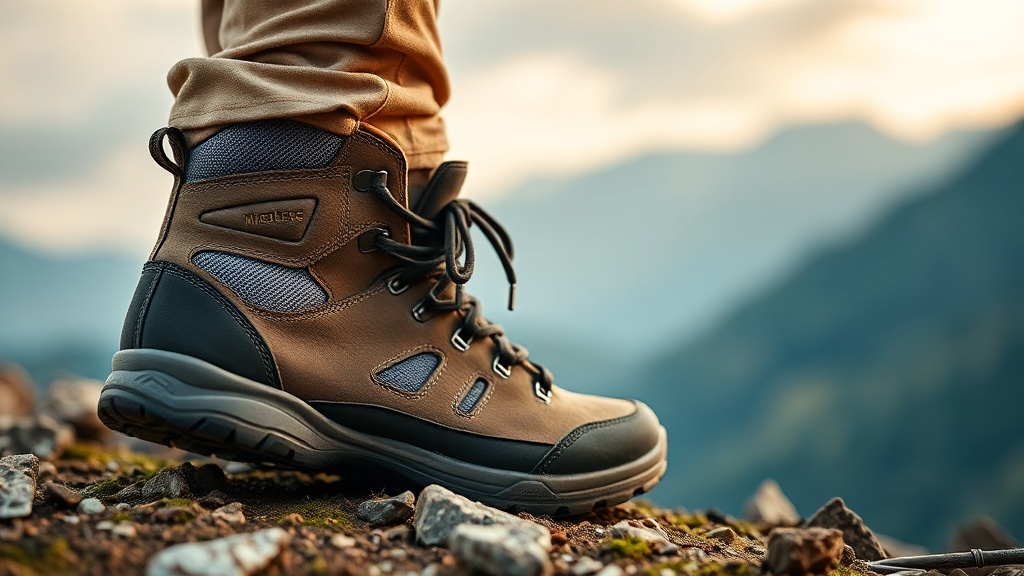
The key Guide to Choosing the Perfect Hiking Boots

Getting the right hiking boots can be the difference between a smooth, enjoyable day on the trail and a miserable experience complete with blisters, rolled ankles, or worse. This guide breaks down what actually matters when selecting hiking footwear—fit, materials, support, and waterproofing—so you don't end up with expensive boots that spend more time in the closet than on the mountain. Whether you're planning a casual day hike around Rattlesnake Ledge or a multi-day trek through the Cascade Mountains, here's what you need to know.
What Type of Hiking Boot Do You Actually Need?
The answer depends entirely on the terrain and distance you're tackling. Hiking boots aren't one-size-fits-all, and buying the wrong category of boot for your adventures is a common mistake that leads to discomfort and wasted money. Understanding the three main categories will help narrow your options quickly.
Light hiking shoes (also called hiking shoes or low-cut models) are best for well-maintained trails, day hikes with light packs, and casual walking. These look like beefed-up running shoes—brands like the Salomon X Ultra 4 GTX or Merrell Moab 3 dominate this space. They're flexible, breathable, and don't require much break-in time. The downside? Ankle support is minimal, so they're a poor choice for rocky scrambles or off-trail travel.
Mid-cut hiking boots rise above the ankle and strike a balance between support and weight. This is the sweet spot for most hikers in the Pacific Northwest. Models like the Lowa Renegade GTX Mid or Oboz Bridger Mid BDry handle rooty forest trails, moderate stream crossings, and uneven terrain without feeling like bricks on your feet. They're versatile enough for day hikes or lightweight backpacking trips.
Mountaineering or heavy backpacking boots are built for serious loads and technical terrain. Think full-grain leather construction, rigid soles, and serious ankle support. The Scarpa Zodiac Plus GTX or La Sportiva Nepal Cube GTX fit here. These boots are overkill for day hiking—but key if you're hauling 50+ pounds up a glacier or side-hilling across scree fields. They're heavy, they take forever to break in, and your feet will sweat. That's the trade-off.
How Should Hiking Boots Fit?
They should feel snug at the heel and midfoot, with about a thumb's width of space between your longest toe and the boot's front. Fit is everything. A boot that doesn't fit properly will cause problems no matter how expensive or well-reviewed it is.
Here's the thing about boot sizing—most people wear hiking boots too small. Feet swell during long hikes (especially in warm weather), and downhill sections jam your toes into the front of the boot. If your toes touch the front when you're walking downhill, you'll end up with black toenails or worse. Always try boots on in the afternoon or evening, when your feet are at their largest.
Bring the socks you'll actually hike in. That thin cotton pair from the store won't replicate the thickness of your Darn Tough or Smartwool hiking socks. Wear them when trying on boots. Walk around the store. Find an incline board if they have one—many outdoor retailers like REI have angled platforms so you can test how your foot slides forward on descents.
Heel lift is another fit issue to watch for. If your heel slides up and down with every step, you'll get blisters. Period. Some minor movement is normal, but if you can fit a finger behind your heel when the boot is laced, they're too big. On the flip side, boots that pinch across the ball of your foot will cause numbness and pain on longer hikes.
Break-in time varies by material. Synthetic boots like the Keen Targhee III might feel comfortable right out of the box. Full-grain leather boots—think Asolo TPS 520 GV—can take weeks or even months to fully soften and mold to your foot. Don't take stiff leather boots on a long hike without putting in the work first. Wear them around town, on short walks, gradually increasing distance.
Is Waterproofing Worth It?
For hikers in the Pacific Northwest, yes—waterproof boots are worth the extra cost and slight weight penalty. The alternative is wet feet, and wet feet lead to blisters, trench foot, and an early end to your hiking season.
Most waterproof hiking boots use a membrane—typically Gore-Tex (often labeled GTX) or a proprietary equivalent like Keen.Dry or Oboz BDry. These membranes block water from entering while allowing some sweat vapor to escape. The catch? No membrane breathes as well as an unlined boot. In hot, dry conditions, waterproof boots can feel swampy. Your feet will sweat more, and that moisture has nowhere to go.
If you hike primarily in arid climates like Central Oregon or the Eastern Sierra, consider non-waterproof boots. They're lighter, breathe better, and dry faster when they do get wet. The Altra Lone Peak (in its non-waterproof version) is a favorite among desert hikers and thru-hikers for exactly this reason.
Even with waterproof boots, water can still get in. Stream crossings above the ankle collar, heavy rain soaking through the tongue gusset, or stepping in a puddle deeper than your boot height—all will leave you with wet feet. Waterproofing keeps water out, but it also keeps water in. Once your feet are wet, they'll stay wet longer than they would in unlined boots.
Leather vs. Synthetic: Which Material Lasts Longer?
Full-grain leather lasts longer and offers better durability, but synthetic materials dry faster and require less maintenance. The right choice depends on your hiking style, budget, and willingness to care for your boots.
| Feature | Full-Grain Leather | Synthetic |
|---|---|---|
| Durability | Excellent—can last 10+ years with care | Good—typically 3-5 years of regular use |
| Water Resistance | Excellent when treated with wax | Depends on membrane; outer fabric absorbs water |
| Break-in Time | Weeks to months | Minimal—often comfortable immediately |
| Weight | Heavier | Lighter |
| Maintenance | Requires regular conditioning and waterproofing | Low—wash and air dry |
| Cost | Higher initial investment | More budget-friendly |
| Best For | Heavy backpacking, off-trail travel | Day hiking, wet climates, casual use |
Nubuck leather (sanded full-grain) offers a middle ground—easier to break in than full-grain, more durable than synthetic, but still requiring some maintenance. The Merrell Moab 3 Mid uses nubuck in its waterproof version, which is why it's been a bestseller for years.
What About Insoles and Lacing?
Stock insoles in most hiking boots are garbage—thin foam that flattens out after a few hikes. Replacing them with aftermarket insoles can transform a mediocre boot into a great one. Superfeet insoles (particularly the Green or Trailblazer models) provide arch support and heel cups that reduce fatigue. Sole insoles are heat-moldable for a custom fit. If you have high arches, flat feet, or any biomechanical issues, don't skip this upgrade.
Lacing technique matters more than most people realize. A standard crisscross works fine for casual walking, but on technical terrain, you need more control. The heel lock (or runner's loop) technique prevents heel slip—thread the lace through the extra eyelet at the top of the boot, create a loop on each side, then cross the laces through the opposite loops before tying. It sounds complicated, but once you learn it, you'll use it on every pair of boots you own.
For descents, tighten the laces over the instep to prevent your foot from sliding forward. For ascents, keep the ankle slightly looser to allow natural flexion. Worth noting: if you're getting pressure points on the top of your foot, skip an eyelet in that area when lacing— relieves pressure without sacrificing overall fit.
When Should You Replace Your Hiking Boots?
Replace hiking boots when the midsole compresses and no longer provides support, the outsole wears smooth, or the waterproof membrane fails. These failures don't always happen at the same time, so knowing what to look for can prevent injury.
The midsole is the shock-absorbing layer between your foot and the ground. It's usually made of EVA foam that compresses over time—even if the boot looks fine on the outside, a collapsed midsole transfers impact directly to your joints. If your knees or ankles hurt after hikes that used to feel fine, your midsoles might be shot. Press firmly on the midsole; if it feels hard and unyielding instead of slightly springy, it's done.
Outsole wear is easier to spot. The lugs (those rubber bumps on the bottom) should be deep enough to grip loose dirt and rock. Once they're worn flat, traction disappears—and not just on sketchy terrain. Wet roots and rocks become skating rinks. The Vibram soles used on quality boots can be resoled by a cobbler, which extends the life of leather boots considerably. Cheaper boots with glued-on outsoles usually aren't worth repairing.
Waterproofing failure shows up as wet socks in dewy grass or damp trails. Membranes can delaminate, crack, or get clogged with dirt and oils. You can sometimes revive water resistance with wash-in treatments like Nikwax or Granger's, but once the membrane itself is compromised, nothing will fix it.
Here's the thing—boots are a safety item, not a fashion statement. Worn-out boots have sent plenty of hikers to the emergency room with sprained ankles or falls on sketchy terrain. Inspect your boots before every season. When in doubt, retire them. Your ankles will thank you.
For more detailed information on foot care and hiking safety, check resources from the National Park Service or The Mountaineers. Investing time in choosing the right boots—and knowing when to let them go—keeps you on the trail and out of the waiting room.