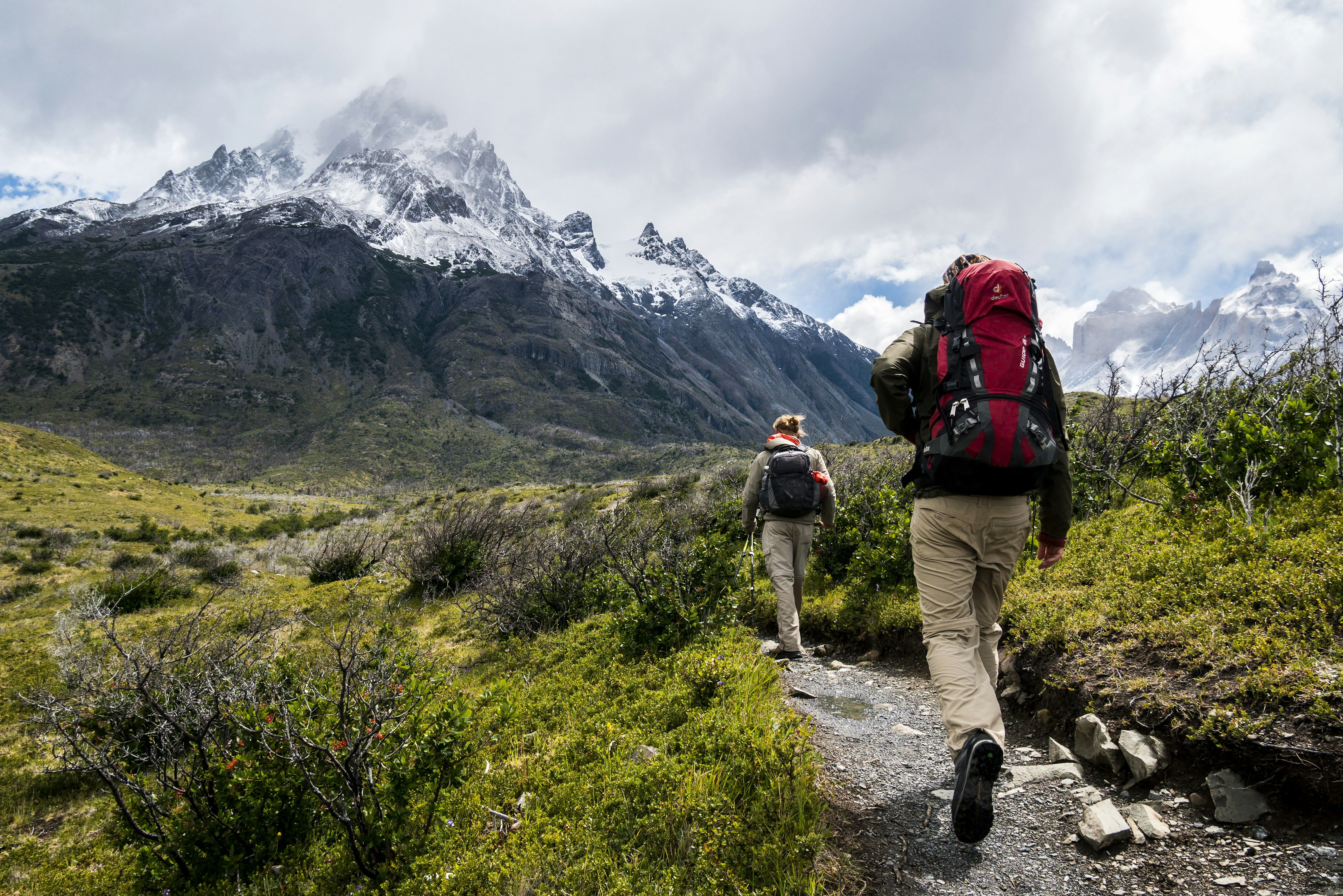
Solo Hiking Isn't the Problem—Complacency Is (The Data Proves It)
In 2025, Garmin logged over 3,000 inReach SOS incidents. Skamania County — the stretch covering the Columbia Gorge and the Mt. St. Helens approaches — saw a 400% increase in SAR missions in May 2025 compared to May 2024. The county sheriff went on record: "The majority of our search and rescue missions are a result of non-resident individuals who act in a negligent or reckless way."
Non-resident individuals. Not solo hikers. Individuals acting negligently.
That distinction matters, and it's what nobody in the "hiking tips" content ecosystem wants to talk about.
The Conventional Wisdom Is Half Right
You've heard it: Never hike alone. Every trail safety pamphlet says it. Your hiking app says it. Your well-meaning coworker who did Mailbox Peak once says it.
Here's what the data actually shows: group size is not the primary risk variable. Decision-making quality is.
In a 2016 study by Zweifel et al. examining avalanche incidents by group size in backcountry skiing, solo travelers had significantly lower relative risk than pairs in three out of four datasets. Groups of five or more had meaningfully higher risk than smaller groups. The researchers weren't making an argument for soloing — they were quantifying how groupthink and diffusion of responsibility play out in backcountry terrain.
This is not an invitation to do something reckless alone. It's a corrective to the idea that having a partner automatically makes you safer. A group of three people who've never navigated off-trail, who left the trailhead at 2:30pm, who have one shared phone with maps only in cell range — that group is not safer than a prepared solo hiker on a trail they know.
The research on group decision-making supports this: groups consistently make riskier choices than individuals when diffusion of responsibility kicks in. Everyone assumes someone else checked the weather. Someone else has the map. Someone else is watching the time. Nobody is actually accountable, because everyone is.
What the SAR Numbers Actually Tell Us
Yosemite NPS SAR data — one of the most detailed public datasets on hiker rescues — breaks down why hikers get lost:
- 16.9% accidentally lost the trail
- 11.7% failed to communicate their plan
- 9.4% miscalculated time or distance
- 7.0% were caught by darkness
- 5.6% intentionally left the trail
- 5.6% had insufficient information or errors in judgment
Look at that list. Every single item is a decision-making failure. Not one of them is "hiking alone."
Across broader SAR data, 41% of operations are triggered by hikers getting lost — navigation failure. Lack of proper equipment accounts for 18% of hiking accidents. Casual hikers — the exact people for whom the "never hike alone" advice is primarily aimed — account for 60% of injuries.
Here's the brutal truth: the advice that keeps getting repeated targets the wrong variable. Telling someone "bring a friend" doesn't fix the fact that they left at 3pm, have no offline map, and have never used a compass. You've added a witness, not a margin of safety.
The Solo Hiker's Actual Risk Protocol
I spent a decade moving freight across the Pacific Northwest. In logistics, you don't manage risk by vibes — you manage it by identifying failure modes and building redundancy against them. Here's how I apply that framework to solo hiking:
1. The Accountability System
Addresses the 11.7% communication failure rate.
Before every solo hike, I do all of the following:
- Tell two people your specific trail name, trailhead location, and planned route
- Give them a hard check-in deadline: "If you haven't heard from me by 7:00pm, call Whatcom County SAR"
- Text them your car's location when you park
- Text them a photo of the trailhead sign and the trail register sign-in
The specifics matter. "Going hiking near Bellingham" is useless to a dispatcher. "Chain Lakes Loop from Artist Point, back by 5pm — silver Tacoma, far end of parking lot B" is actionable.
2. Navigation Redundancy
Addresses the 41% lost-hiker problem.
Every solo hike gets all three of these:
- Paper topo map of the area, marked with your route
- Compass — functional, not decorative, and you should know how to use it before you're standing at a junction in fog
- Offline GPS app (Gaia GPS, CalTopo, AllTrails downloaded offline) with the route loaded before you leave cell range
At each major junction, take a photo of the trail sign and note your exact time. If your phone dies, you have the paper. If you lose the paper, you have the phone. Redundancy is the point.
Hard rule: the 2pm turn-around time. If I haven't reached my destination by 2pm, I'm turning around. The mountain will be there next weekend. Most of the hikers caught by darkness in the SAR data ignored some version of this.
3. Emergency Communication
Garmin's 2025 data shows 12% of SOS users self-rescued using two-way messaging — they didn't need a helicopter extraction, they needed real-time communication to problem-solve their situation. That's the value proposition of an inReach or SPOT: not just sending an SOS, but giving rescuers your exact position and condition, which reduces response time and the likelihood of a helicopter deployment.
For Pacific Northwest day hikes on maintained trails, a satellite communicator is optional-but-smart. For any backcountry overnight solo, it's required equipment. Non-negotiable.
4. The Competence Threshold
Solo hiking is not for beginners, and saying otherwise is irresponsible.
Solo travel belongs on trails that are below your demonstrated skill level. If you've done a route twice with a group, you're a candidate to solo it. If you've never done Class 2 scrambling, you don't do it solo first. The avalanche research found higher risk in groups than in solo travelers — but that finding applies to experienced soloists making clear-headed decisions, not to inexperienced hikers freed from peer-pressure accountability.
At minimum, solo hikers should have: blister management, sprain stabilization, hypothermia recognition, and wound care. A WFA course is the floor. WFR certification is the goal if you're regularly going deep into the backcountry alone.
5. Pre-Hike Risk Assessment
I use four questions before committing to any solo objective:
- What risk am I putting myself in?
- What risk am I putting SAR volunteers in if I need rescue?
- What risk am I putting the environment in during an emergency extraction?
- Is my skill level appropriate for today's conditions on this specific terrain?
That last word — today's — is where most people fail the check. The same trail in July and in October can be entirely different risk profiles. You're assessing the route as it exists on the day you're going, not as it appeared in someone's August trip report.
When Solo Is the Wrong Call
I'm not writing a defense of recklessness. There are objective scenarios where solo travel increases risk beyond what preparation can mitigate:
River crossings with significant volume or fast current — partner spotting and handline assistance is real risk reduction, not theater.
Technical terrain above Class 3 — partner assistance in a self-rescue scenario is often the difference between hiking out and waiting for a helicopter.
Unfamiliar off-trail navigation in areas where getting lost means a multi-night survival situation. Build your proven range before soloing into that kind of complexity.
Known medical conditions that can incapacitate without warning. This is a personal risk calculation, but build your system around your actual situation — not the situation you wish you were in.
The Bottom Line
Here's what I've come to after watching the SAR numbers for years: the most dangerous thing in the Cascades is not hiking alone. It's hiking with false confidence.
A group of friends who turn a "quick day hike" into a 6pm summit push because nobody wanted to be the one to call it — that's more dangerous than a prepared soloist with a PLB, a paper map, and a 2pm turn-around time written in the trail register.
Groups provide a social safety net. They do not provide a competence upgrade.
Solo hiking forces you to own every single decision. You can't defer to the group, you can't assume someone else checked the forecast, you can't count on peer pressure to drag you to the summit when your gut says turn around. That enforced ownership — when it's backed by preparation and honest self-assessment — is precisely what makes experienced solo hikers statistically less dangerous to themselves than peer groups making committee decisions on a ridge.
Do the prep. Know your trail. Tell two people where you're going and when to call SAR if you're not back. Carry the redundant nav gear. Be honest about your competence level.
Then go. The Cascades are worth it.
Permit requirements vary by trail and change frequently. Check current pass requirements at Recreation.gov and the USFS Northwest Forest Pass page before you leave the driveway.