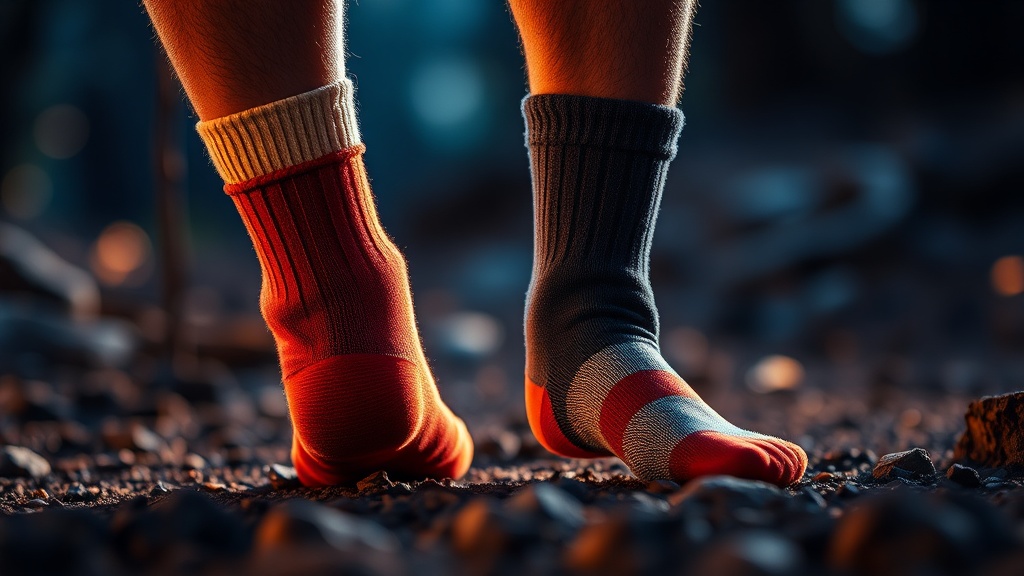
Protect Your Feet with Better Sock Selection

Quick Tip
Always choose moisture-wicking wool or synthetic blends over cotton to prevent blisters.
Stop Blisters Before They Start
This post covers how to select the right hiking socks to prevent blisters, hot spots, and moisture-related foot injuries. Most hikers focus entirely on the boots—ignoring the fact that a bad sock can ruin a high-end boot's performance. If you're dealing with painful friction or wet feet, your gear selection is likely the culprit.
What Material Should You Use for Hiking Socks?
Synthetic blends or Merino wool are the only acceptable choices for serious trekking. Cotton is your enemy on the trail; it absorbs moisture and stays heavy, which leads to skin maceration and blisters. I've seen too many people ruin a perfectly good trip because they wore standard gym socks (a mistake you can't afford when the terrain gets technical).
Stick to high-quality Merino wool brands like Darn Tough or Smartwool. These materials move moisture away from the skin and maintain thermal properties even when damp. If you're hiking in the Cascades, you need gear that won't fail when the temperature drops or the rain hits.
- Merino Wool: Best for temperature regulation and moisture wicking.
- Synthetic (Polyester/Nylon): Great for durability and quick drying.
- Cotton: Avoid at all costs—it's a recipe for disaster.
How Do I Prevent Blisters While Hiking?
Preventing blisters requires a combination of moisture management and friction reduction. You need to ensure your socks fit snugly without bunching up inside your boots. A bunching sock creates a localized pressure point—a "hot spot"—that will tear your skin within a few miles.
Consider a two-layer system if you're prone to foot issues. Using a thin liner sock under a heavier hiking sock can help mitigate friction. This is a standard practice for long-distance hikers and is often more effective than just buying thicker socks. It's a simple mechanical fix for a complex problem.
| Sock Type | Best Use Case | Durability |
|---|---|---|
| Lightweight Liner | Preventing friction/Blister prevention | Moderate |
| Mid-Weight Merino | Standard day hikes/Technical terrain | High |
| Heavyweight Boot Sock | Winter hiking/Cold environments | Very High |
Don't forget that foot care is part of your overall gear maintenance. If you notice a hot spot, address it immediately with a bandage or moleskin. It's much easier to fix a small irritation than a full-blown blister that prevents you from walking. Proper foot care is just as vital as carrying a small first aid kit.
Check your fit frequently. If your toes feel cramped or your arches feel unsupported, your socks might be the issue. A proper fit is non-negotiable for long miles.