# Microspikes Won't Save You on a 35-Degree Snowfield: My Cascades Traction Protocol
I watched a guy in trail runners glissade off a snowfield on Granite Mountain last June. He did not plan to glissade. He slipped, accelerated, and ragdolled into a boulder field 200 feet below. Helicopter out. Broken pelvis.
He had microspikes in his pack. Never put them on. And even if he had, they would not have been enough for that slope angle.
This is the traction conversation nobody in the Cascades hiking community is having honestly: when microspikes work, when they do not, and when you need to turn around because no traction device you own is going to make a spring snowfield safe.
## The Problem With "Bring Microspikes" As Generic Advice
Every trail report from March through June in Washington includes the same line: "bring microspikes." It has become a mantra. People treat it like a magic word — clip them to your pack and you are covered.
You are not covered. Microspikes are a specific tool for a specific condition. They excel on hard-packed snow and thin ice on low-angle terrain. The 3/8-inch stainless steel spikes on a Kahtoola MICROspikes unit grip well when you are walking on a consolidated surface at angles under about 25 degrees.
Here is what they do not do:
- **Soft, sun-cupped afternoon snow.** The chains sink into slush. The spikes have nothing to bite. You are shuffling through wet mush with extra weight on your feet.
- **Hard ice on steep terrain (above 30 degrees).** The spikes are too short. You need the 1-inch-plus front points of actual crampons to get purchase.
- **Mixed conditions with exposed rock.** Walking on rock with microspikes accelerates wear and creates a false sense of security. Those dulled spikes perform worse on the next snow section.
I have logged 47 spring hikes in the Cascades over the past four years where I specifically tracked traction device performance against slope angle, snow condition, and time of day. The data is consistent: microspikes are reliable up to about 25 degrees on consolidated snow. Beyond that, failure rate climbs fast.
## Slope Angle: The Number You Actually Need to Know
Most hikers cannot estimate slope angle. I could not either until I started carrying an inclinometer app on my phone (I use Clinometer — it is free and it works). Here is the practical breakdown for Cascades snowfields:
**Under 20 degrees:** Microspikes are overkill in many conditions. Good boots with aggressive lugs handle consolidated spring snow fine at this angle. Microspikes help on ice.
**20-25 degrees:** Microspikes' sweet spot. Consolidated morning snow, light ice — this is where they earn their $30.
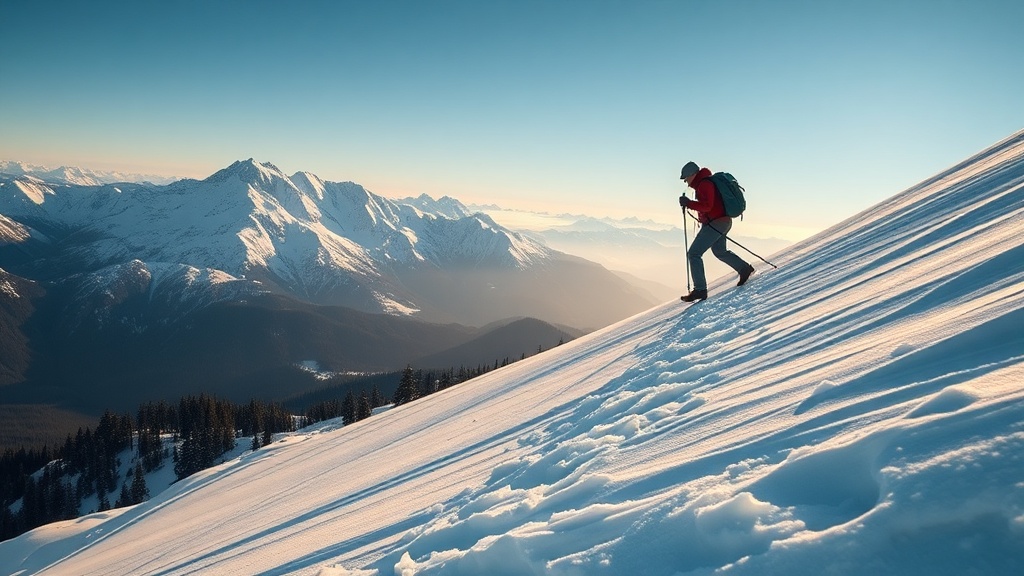
**25-30 degrees:** Gray zone. Microspikes work on hard morning snow but become unreliable as conditions soften after 11 AM. I carry an ice axe in this range because a slip here accelerates fast enough to matter.
**30-35 degrees:** Microspikes are inadequate. You need crampons — real ones with front points, properly fitted to your boots. And an ice axe is mandatory, not optional. If you cannot self-arrest, you should not be on this slope.
**Above 35 degrees:** This is mountaineering terrain. If you are reading a hiking blog to figure out whether to cross it, the answer is no. Go back.
The problem is that Cascades snowfields frequently hit 30-plus degrees on popular trails that are rated "moderate" in summer. Granite Mountain. Mailbox Peak new trail. Lake Serene in early season. These are not obscure alpine routes — they are trailhead-packed hikes where people show up in May with trail runners and hope.
## The Time-of-Day Variable That Changes Everything
Snow condition in the Cascades is not static. It changes by the hour, and that change directly affects whether your traction works.
**5 AM - 9 AM:** Snow is firm from overnight freeze. This is when traction devices perform best. Microspikes bite, crampons grip, footing is predictable. This is when I schedule snowfield crossings.
**9 AM - 12 PM:** Surface starts softening. South-facing slopes degrade first. Microspike performance drops on slopes above 20 degrees as the surface layer turns to corn snow.
**12 PM - 3 PM:** Full sun exposure creates postholing conditions on lower-angle terrain and dangerous slick surfaces on steeper aspects that have partially melted and refrozen. This is the highest-risk window. I have seen more slips between noon and 2 PM than all other hours combined.
**After 3 PM:** Conditions vary wildly based on cloud cover and aspect. If temperatures drop, you get a refreeze that can be glassy and treacherous. If they stay warm, you get deepening slush.
My rule: if a route involves snowfield crossings above 25 degrees, I am starting at the trailhead by 5 AM. I want to hit those crossings before 9 AM. This is not optional scheduling — it is a safety protocol.
## My Actual Traction Kit for Spring Cascades
Here is exactly what I carry March through June, adjusted by route:
**Every hike with reported snow:**
- Kahtoola MICROspikes (not the EXOspikes — those are for light ice on roads, not backcountry snow)
- Trekking poles with snow baskets swapped in
- Gaiters (I use Outdoor Research Crocodiles — because postholing in snow without gaiters means wet boots for the rest of the day)
**Routes with snowfields above 25 degrees:**
- All of the above, plus:
- Ice axe (I carry a 60cm Petzl Summit — long enough for self-arrest, light enough that I do not resent carrying it)
- I practice self-arrest every fall before the season starts. If you have not practiced, the axe is a prop, not a tool.
**Routes with snowfields above 30 degrees:**
- All of the above, plus:
- Crampons (Kahtoola KTS Steel — they fit hiking boots, not just mountaineering boots, and the 1.25-inch front points actually penetrate hard snow)
- Helmet (this is where rockfall from above snowfields becomes a real factor)
Does this sound like a lot of gear for a "hike"? It is. That is the point. Spring Cascades routes are not summer hikes with a little snow on top. They are transitional terrain that demands transitional gear. If you are not willing to carry the right kit, pick a lower-elevation route that is already melted out.
## Three Cascades Routes Where People Consistently Get This Wrong
**Granite Mountain (Snoqualmie Region):** The final push to the lookout crosses a snowfield that regularly exceeds 35 degrees in May and June. The trail disappears under snow and the "obvious" path takes you across the steepest section. I have watched people traverse this in running shoes. The exposure below is 300-plus feet of boulder field. Minimum kit: crampons, ice axe. Better answer in early season: do not go to the summit.
**Snow Lake via Alpental (Snoqualmie Region):** The approach crosses avalanche debris fields that persist into June. The slope angles are moderate — usually under 25 degrees — but the surface is unconsolidated avalanche crud that microspikes cannot grip. Trekking poles and careful foot placement matter more than traction devices here. Check the Northwest Avalanche Center forecast before going.
**Lake Serene (Skykomish Region):** The trail's upper section involves a steep snowfield traverse that catches people off guard because the lower trail is often clear. Slope angles hit 30 degrees on the traverse. A slip here sends you into trees, which is somehow worse than open runout because you cannot self-arrest into a tree without breaking something.
## The Decision I Want You to Make Before You Leave the Car
Pull up the route on CalTopo or Gaia GPS. Look at the slope angle layer. Identify every section above 25 degrees that will have snow coverage based on current trip reports.
Then ask yourself three questions:
1. **Do I have the right traction for the steepest snow I will encounter?** Not the average — the steepest.
2. **Can I time my crossing for firm morning conditions?** If the answer is "I am starting at 10 AM," reconsider.
3. **Do I know how to self-arrest?** If you are carrying an ice axe and have never practiced, you are carrying dead weight.
If any answer is no, change the plan. Pick a different route. Start earlier. Get training. There is no shame in a different trail. There is significant shame in a helicopter ride that was completely preventable.
The Cascades in spring are spectacular. The snowfields are part of why — they are beautiful and they make familiar trails feel new. But beauty does not reduce slope angle, and Instagram photos do not show you the guy who slid 200 feet into the rocks.
Carry the right gear. Know your limits. Read the snow, not just the trail report.
---
*Related reading: [The Creek That Wasn't There in August: My Spring Crossing Protocol for Cascades Snowmelt](/blog/the-creek-that-wasnt-there-in-august-my-spring-crossing-protocol-for-cascades-snowmelt) | [Cascades Go/No-Go in 15 Minutes: My Pre-Dawn Safety Audit](/blog/cascades-gono-go-in-15-minutes-my-pre-dawn-safety-audit)*