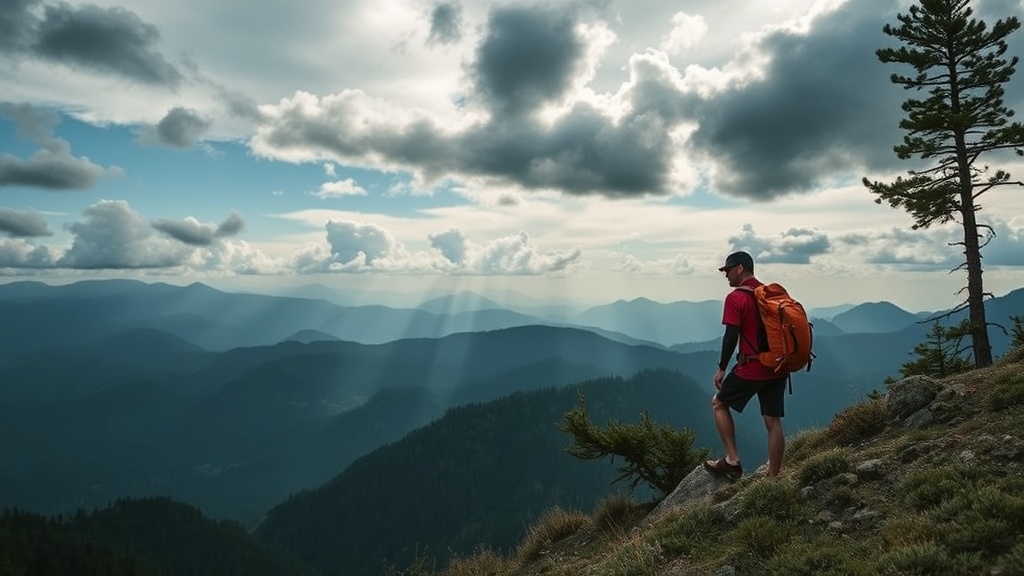
How to Plan Your First Multi-Day Backpacking Adventure
Choosing a Realistic Route
Multi-day backpacking is not simply car camping with a longer walk. Poor route selection accounts for more failed first trips than gear failures, weather, or physical conditioning combined. A first-time backpacker needs to internalize this truth: every mile on day three feels twice as long as mile one. Plan accordingly.
The ideal first multi-day route covers 15 to 25 miles total across three to four days. This translates to 5 to 8 miles per day—numbers that sound trivial to a day hiker but become genuinely demanding when carrying 30 to 35 pounds over uneven terrain with 2,000 feet of elevation gain. The Wonderland Trail around Mount Rainier averages 93 miles; this is not a first-trip candidate. Neither is the John Muir Trail, which covers 211 miles with multiple 11,000+ foot passes.
Look for loops rather than out-and-back routes. The Timberline Trail around Mount Hood offers a 41-mile circuit with established campsites at Ramona Falls, Elk Cove, and Cloud Cap. A beginner can complete this in four days at roughly 10 miles per day—a stretch target but achievable for someone in decent hiking condition. The advantage of a loop: different scenery daily, and no psychological drag of retracing steps when energy flags.
Check cumulative elevation gain, not just distance. AllTrails lists the Enchantments Core Zone as 18 miles, which sounds moderate. The reality: 4,500 feet of gain on day one alone, often with overnight temperatures dropping to 25°F even in August. Washington's Alpine Lakes Wilderness requires permits booked through Recreation.gov; the lottery opens February 15 at 7:00 AM Pacific Time, and popular entry points like Colchuck Lake fill within hours. Plan six months ahead for peak season (July through September).
Gear Selection: The 30-Pound Threshold
Base weight—the gear carried excluding food, water, and fuel—should stay under 20 pounds for a first trip. Total pack weight at the trailhead should not exceed 30 pounds. Exceed this threshold and the physical penalty compounds exponentially. At 35 pounds, knees and shoulders absorb punishment that turns a pleasant experience into suffering.
Start with the Big Three: shelter, sleep system, and pack. A tent like the REI Trail Hut 2 weighs 4 pounds 10 ounces and costs $249. A quilt system from Enlightened Equipment (Revelation 20°F, 1 pound 6 ounces) paired with a Therm-a-Rest NeoAir XLite sleeping pad (12 ounces) provides three-season capability for under $500 total. The pack itself—Osprey's Atmos AG 65 runs 4 pounds 10 ounces—must fit properly. Get fitted at a specialty retailer; a medium torso with a 32-inch waist requires different sizing than the label suggests.
Avoid gear redundancy. One insulated jacket suffices. One cooking pot (550ml to 750ml titanium) handles all meals. A headlamp (Black Diamond Spot 400, 3.2 ounces) replaces flashlights, phone lights, and lanterns. Each item gets weighed on a kitchen scale; record weights in a spreadsheet. This discipline reveals the truth: that "just in case" item adding 8 ounces rarely gets used.
Water filtration is non-negotiable. The Sawyer Squeeze (3 ounces, $37) threads onto standard disposable bottles. Carry two 1-liter Smartwater bottles (1.2 ounces each) rather than a 3-liter hydration bladder. Bladders develop mold in hoses and cannot be assessed for remaining volume without removing the pack. In the Cascades, plan to filter every 2 to 3 miles; sources include Snow Lake, Mason Lake, and the numerous creeks feeding the Snoqualmie River system.
Food: Calories Per Ounce
Backpacking burns 4,000 to 6,000 calories daily depending on terrain, pack weight, and individual metabolism. Replacement requires 2 to 2.5 pounds of food per day. At $8 to $12 per pound for commercially prepared backpacking meals, a four-day trip runs $64 to $96 in food costs alone. The weight penalty of "fresh" food—apples, sandwiches, cheese—exceeds the psychological benefit for most hikers.
Target 125 calories per ounce minimum. Peanut butter (168 cal/oz), olive oil (240 cal/oz), and macadamia nuts (204 cal/oz) form the caloric foundation. Breakfast: instant oatmeal with powdered milk and a spoonful of peanut butter (500 calories, 4 ounces). Lunch: tortillas with salami and cheese (600 calories, 5 ounces). Dinner: Mountain House Beef Stroganoff (600 calories, 4.8 ounces package weight) supplemented with olive oil (400 calories, 1.5 ounces). Snacks: trail mix, energy bars, and chocolate (200 to 300 calories per ounce).
Practice cooking at home. Canister stoves like the MSR PocketRocket 2 (2.6 ounces, $45) boil 500ml of water in 3.5 minutes. A standard 8-ounce fuel canister provides approximately 16 boils—enough for four days assuming two hot meals daily and morning coffee. In sub-40°F temperatures, canister efficiency drops; sleep with the canister inside the sleeping bag to maintain pressure.
Water Strategy and Safety Protocols
Giardia lamblia infection—beaver fever—results from drinking untreated surface water. Symptoms appear 1 to 3 weeks post-exposure and include violent diarrhea, cramps, and fever. Treatment requires prescription antibiotics. The inconvenience of filtering water pales against two weeks of gastrointestinal distress. Filter every source, no exceptions.
Carry capacity for the longest dry stretch plus 25 percent safety margin. In the Alpine Lakes Wilderness, streams appear reliably every 2 to 4 miles. In the Eastern Sierra, dry stretches of 8 to 12 miles exist between reliable sources. Research specific water reports via recent trip reports on Washington Trails Association (wta.org) or High Sierra Topix forums. Conditions change weekly; snowmelt feeds streams through July, after which many intermittent sources dry completely.
The ten essentials remain non-negotiable: navigation (map and compass, not phone GPS alone), sun protection, insulation, illumination, first-aid, fire starter, repair kit, nutrition, hydration, and emergency shelter. A SOL Emergency Bivvy (3.8 ounces, $18) provides insurance against an unplanned night out. The first-aid kit requires blister treatment (Leukotape P, moleskin), pain relievers, antihistamines, and any personal medications. Learn the SAM splint technique; ankle injuries on uneven terrain account for 35 percent of backcountry evacuations in Olympic National Park.
Permits, Regulations, and Leave No Trace
Overnight trips in designated Wilderness Areas require permits. In Washington State, the Enchantments, Glacier Peak Wilderness core areas, and sections of Mount Rainier National Park operate on quota systems. The Mount Baker-Snoqualmie National Forest accepts reservations at Recreation.gov; dispersed camping requires a free permit available at trailheads, though popular areas like the Gothic Basin implement quotas.
Bear canisters are mandatory in Olympic National Park, North Cascades National Park, and parts of the Alpine Lakes Wilderness. The BV500 (2 pounds 9 ounces, $80) fits 7 days of food for one person. Hanging food—counterbalance method 12 feet high, 6 feet from trunk—is legally acceptable in many areas but practically unreliable. Bears in the Cascades have learned to cut lines. Canisters remain the only reliably bear-proof method.
Catholes for human waste must be 6 to 8 inches deep, 200 feet from water sources, trails, and campsites. Pack out toilet paper. In high-use areas like the Enchantments Core, WAG bags (Waste Alleviation and Gelling) are mandatory; failure to carry and use them results in $5,000 fines. These rules exist because 8,000 annual visitors to the Core Zone would destroy the ecosystem within a decade without strict waste management.
Physical Preparation
Cardiovascular fitness alone proves insufficient. Load-bearing conditioning—walking with weight—conditions shoulders, hips, and feet in ways no gym machine replicates. Begin training 8 weeks before departure. Week 1: three 3-mile walks with 15 pounds. Week 4: one 6-mile hike with 25 pounds. Week 7: an overnight trip with full pack weight. This progression reveals gear issues—blister points, pack fit problems, gear accessibility—while stakes remain low.
Test every piece of gear on a local overnight before the main trip. Set up the tent in rain. Cook dinner in wind. Sleep in the sleeping bag at temperatures 10 degrees warmer than the rated limit. Discover that the "waterproof" boots leak, or that the sleeping pad deflates, within driving distance of home.
Final Checklist Before Departure
Three days before departure: check weather forecasts at NOAA.gov using specific coordinates, not general city forecasts. Mountain weather changes rapidly; afternoon thunderstorms above treeline are standard in the Cascades during July and August. Postpone if sustained winds exceed 30 mph or temperatures drop below 20°F for a first trip.
Leave a detailed itinerary with a trusted contact including trailhead parking coordinates, planned campsites, and return time. Establish a check-in protocol: if not contacted by 8:00 PM on the return date, the contact initiates emergency services. This buffer provides time for minor delays without triggering unnecessary search-and-rescue operations that cost taxpayers $50,000 to $100,000 per mission.
Multi-day backpacking rewards preparation with genuine wilderness experience. The Cascades offer thousands of miles of trail accessible within three hours of Seattle. Respect the complexity, plan with precision, and return with skills that transfer to bigger objectives—the Pacific Crest Trail, the Colorado Trail, or the high routes of the Sierra Nevada. Start small, start safe, and build systematically.
Steps
- 1
Research and Select the Right Trail for Your Skill Level
- 2
Create a Comprehensive Gear and Packing Checklist
- 3
Prepare Safety Protocols and Share Your Itinerary