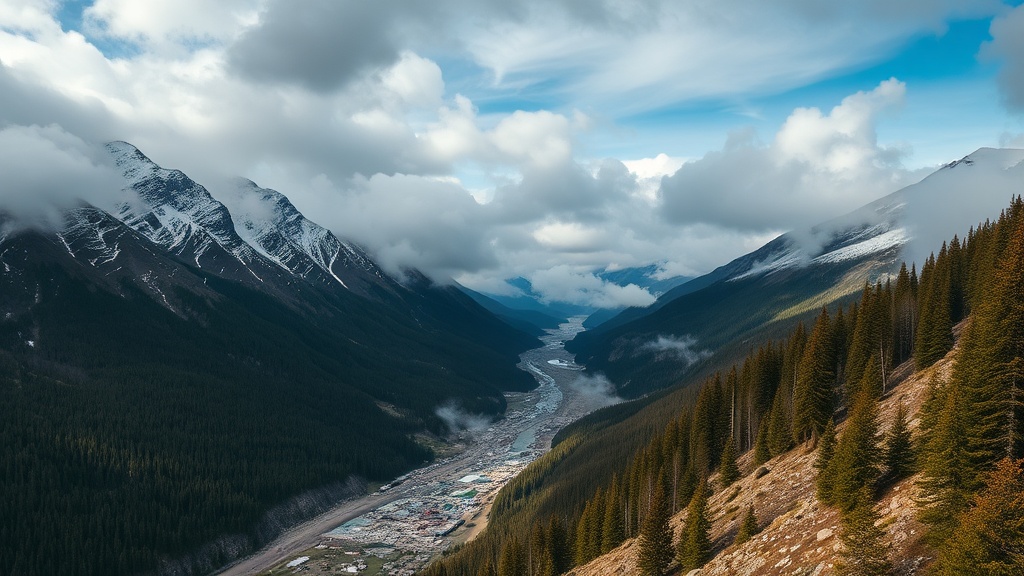
Cascades High Elevation Logistics: Managing Rapid Weather Shifts

A clear blue sky at the trailhead in North Bend doesn't mean anything when you're at 6,000 feet. You're halfway up a ridge, the wind suddenly shifts to a biting 30 knots, and the temperature drops fifteen degrees in ten minutes. This isn't a slow transition; it's a collision. In the Cascades, weather isn't a gradual change—it's a physical event that can derail a perfectly planned outing. Understanding how to manage these high-altitude shifts isn't about being a weather expert; it's about practical, logistical preparation for when the environment stops playing nice.
Most hikers rely on a single app or a glance at the sky. That's a mistake. Relying on a single data point is a failure in risk management. If you're heading into high-elevation terrain, you need to treat your gear and your timeline with the same precision a logistics manager uses to track a shipment. One wrong move—one forgotten layer or one underestimated descent time—and a fun afternoon turns into a survival situation. We're looking at the hard realities of high-altitude environmental shifts and how to prepare for them.
How much gear should I carry for high elevation?
When you move from the valley floor to a high alpine pass, you aren't just changing altitude; you're changing ecosystems. The gear you need is dictated by the most extreme possible scenario, not the most likely one. If you're hiking in the Cascades, you should assume a sudden drop in temperature is inevitable.
- The Layering System: Forget the word "jacket." Think in terms of moisture management. You need a base layer that wicks sweat (synthetic or merino, never cotton), a mid-layer for heat retention, and a shell that is both windproof and waterproof.
- The Emergency Buffer: Always carry one extra insulation layer that you don't intend to wear unless things go wrong. This is your safety net.
- Footwear Stability: High-altitude terrain is often loose scree or melting snow patches. Your boots need enough ankle support to handle uneven, shifting surfaces.
The goal is to have a kit that allows you to adjust your microclimate instantly. If you wait until you're shivering to put on your heavy layers, you've already lost the battle. You want to stay ahead of the discomfort. Check the National Weather Service for localized mountain forecasts before you leave the trailhead, as valley forecasts are useless for alpine peaks.
What are the signs of incoming high-altitude storms?
You can't always see a storm coming, but you can feel the precursors. In the Cascades, high-altitude weather often moves in via "orographic lift," where moist air is forced upward by mountains, cools, and dumps heavy precipitation. If you see certain patterns, it's time to reconsider your turnaround time.
First, watch the clouds. Cirrus clouds (high, wispy clouds) can be the first sign of an approaching frontal system. If they thicken into altostratus clouds, the weather is changing. Second, watch the wind. A sudden increase in wind speed at higher elevations often precedes a pressure drop. Third, observe the light. A sudden, eerie dimming of the light—even if it's not a storm—suggests heavy cloud cover or high-altitude moisture is moving in.
"The mountains don't care about your itinerary. They only care about physics and thermodynamics."
If you see these signs, don't try to "push through" to the summit. In my experience, the most dangerous part of any hike is the descent when you're tired and the weather is turning. If the wind is picking up and the clouds are lowering, turn around. The summit isn't going anywhere, but your ability to stay warm might.
How do I plan for rapid temperature changes?
Logistically, you should plan your hike based on the "worst-case" temperature, not the "expected" temperature. If the forecast says 60 degrees at the trailhead and 45 degrees at the summit, prepare for 35 degrees. This accounts for wind chill and the inevitable moisture from unexpected rain or snow.
Use a strict weight-to-utility ratio. Every ounce in your pack should serve a purpose. If you're carrying heavy, bulky items that you might not use, you're wasting energy. However, a lightweight, high-quality wind shell is non-negotiable. You can find detailed gear specifications and testing results on sites like REI Expert Advice to ensure your gear meets the demands of the Cascades.
When you are moving through high-elevation terrain, your metabolic rate is your engine. As the temperature drops, your body uses more energy just to stay warm. This means you need to consume more calories than you would on a lower-elevation trek. If you're out of fuel or food, your body's ability to regulate temperature fails. This is a logistical failure in your personal energy management. Don't let it happen.
Finally, keep an eye on your descent. Most people make the mistake of getting comfortable at the summit and forgetting that the descent is where the most accidents happen. As you descend, you might encounter different weather patterns entirely. Be ready to layer up as soon as you feel the first chill. It's much easier to put a layer on while you're still warm than to try and get warm after you've become hypothermic.
Treat every high-elevation hike as a tactical operation. Have a plan, have the right tools, and respect the speed at which the environment can change. The Cascades are beautiful, but they are also unforgiving to those who treat them like a casual stroll in a park.