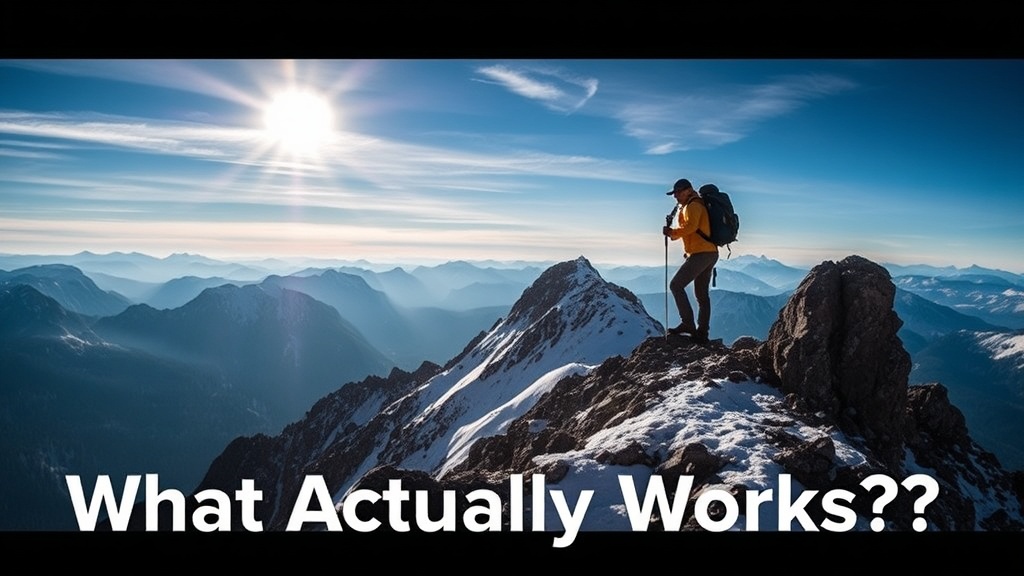
Cascades High Elevation Gear: What Actually Works?

Why Does High Altitude Gear Failure Matter?
Have you ever stood on a ridge in the North Cascades, watching the clouds roll in, only to realize your gear isn't up to the task? It isn't just about comfort; it's about survival. When the temperature drops twenty degrees in ten minutes—which happens more often than people realize—your equipment becomes your lifeline. Most people look at a gear list and see a suggestion. In the high Cascades, I see a checklist of variables that can either keep you safe or leave you stranded. This post breaks down the specific hardware and apparel requirements for high-altitude environments where the margin for error is thin.
The mistake I see most frequently is people treating high-altitude hiking like a standard summer stroll. The Cascades aren't a flat park. You're dealing with rapid atmospheric changes, intense UV exposure, and unpredictable wind shear. If your gear fails, you can't just walk into a shop to fix it. You have to manage the situation with what's on your back. That's why precision in selection matters more than brand recognition.
Is a Down Jacket Sufficient for Mountain Weather?
A common question I get is whether a single down jacket is enough for a high-elevation day hike. The short answer is: no. Down is fantastic for warmth-to-weight ratios, but it has a massive Achilles heel—moisture. If you're sweating through your exertion and then sit down to rest, or if you encounter a sudden rainstorm, that down loses its loft and stops working. It's a single-point failure waiting to happen.
Instead of relying on one heavy piece, I recommend a system. You need a moisture-wicking base layer, a mid-layer for warmth (like a fleece or a synthetic insulated jacket), and a shell that actually stops the wind. Synthetic insulation is often better for the Cascades because it handles moisture better than down. If you're looking at technical specifications, check the REI Expert Advice on layering to understand how these systems interact. Don't just buy a jacket because it looks good in a photo; buy it because the technical specs match the environment you're entering.
How Much Water Should You Carry for High Elevation?
How much water do you actually need when you're climbing several thousand feet? This isn't a static number. It depends on your pace, the ambient temperature, and your altitude. At higher elevations, you lose moisture through respiration much faster than you realize. You might not feel as thirsty because the air is cool, but dehydration is a silent thief of your energy and cognitive function.
I always tell people to calculate their base needs and then add a buffer. If your plan says you need three liters, carry four. If you're crossing a ridge with high wind, you'll lose water to evaporation constantly. I also recommend carrying an electrolyte supplement. Plain water is fine, but replacing salts is vital when you're working hard in thin air. You can find detailed hydration science and recommendations through the CDC Water Safety guidelines to understand why pure water isn't always enough during intense physical activity.
What Footwear Handles Alpine Terrain Best?
The terrain in the Cascades is rarely a well-maintained gravel path. You're dealing with loose scree, wet granite, and exposed roots. A standard running shoe won't cut it. You need something with a stiff midsole and aggressive traction. If your foot is flexing too much on uneven ground, your calves will burn out before you even reach the summit. I've seen too many hikers forced to turn back because their footwear couldn't handle the technicality of the descent.
- Stiffness: Look for a shoe or boot with a rock plate or a stiff sole to prevent foot fatigue.
- Ankle Support: In high-altitude environments, a slight trip can lead to a serious injury. Higher ankle collars provide stability.
- Outsole: You need deep lugs. If the tread is worn down, you're essentially walking on ice when the rock is wet.
Don't overlook the importance of the fit. A boot that is even slightly too small will cause your toes to hit the front during steep descents, leading to bruised nails. This is a preventable injury that can ruin a trip. Check your fit at the end of the day, not just when you're buying them. If you're unsure about sizing, consult the local topographic maps of your destination to see if the terrain matches your footwear's capability.
Can Lightweight Gear Replace Reliability?
The "ultralight" movement has its place, but it can be dangerous if you're a beginner. I've seen people shave weight off their packs by removing things that are actually safety-critical. In the Cascades, weight is a trade-off for stability. A heavier pack might be more stable, and a thicker jacket might be more reliable. If you're going into a high-alpine environment, do not sacrifice a functional tool for a lighter number on your scale.
If you're choosing between a lightweight bivvy and a slightly heavier, more durable tent, pick the tent. If you're choosing between a lightweight windbreaker and a heavy-duty hardshell, take the hardshell. The goal is to reach the end of the trail, not just to have the lightest stats in your hiking group. Precision in your kit means knowing exactly what each item does and where it fails. If you don't know the failure point of your gear, you shouldn't be carrying it into the high country.
Keep your gear organized. I treat my pack like a logistics manifest. Everything has a designated spot. If I need my shells, I shouldn't be digging through my food bag for ten minutes while the wind picks up. Every second spent searching for gear is a second spent losing heat or losing time. Organize by frequency of use: water and snacks first, then navigation, then layers, and finally emergency gear at the very top or in an easy-access pocket.